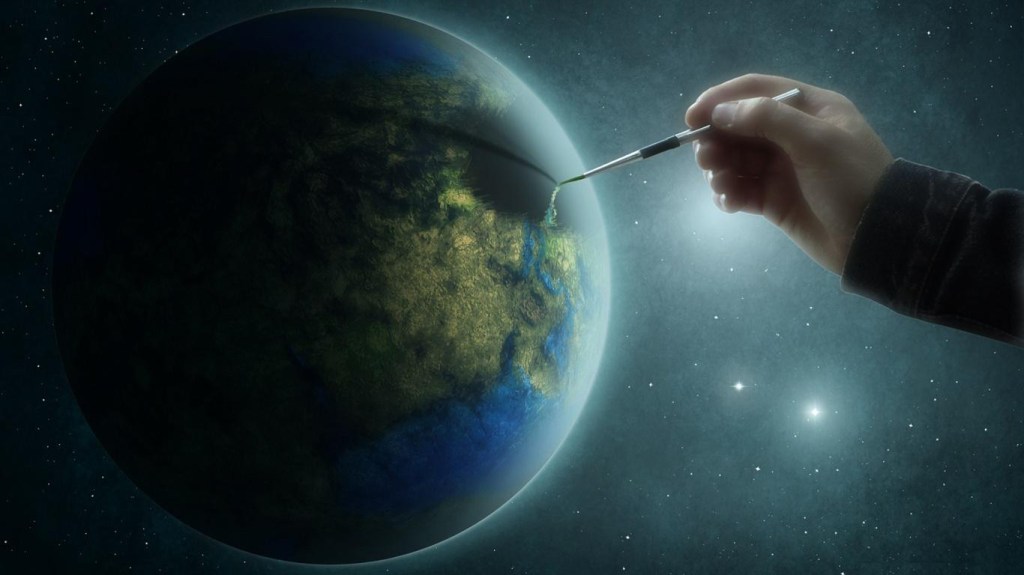
Building worlds is a magical and artful skill, I confess that what I write here was garnered from conversations with Terry Pratchet, someone I met accidentally through a friend who was a commissioning editor for Harper Collins. We entered into a protracted contact through letters (remember them!) and I still consider Terry’s generosity in taking time to correspond to a nascent and struggling writer.
So here I will try to distill the knowledge and skill of someone I consider a master at world building
Every story starts with a spark—an idea, a character, a “what if?” moment that makes you want to put pen to paper. But what makes that spark grow into something unforgettable is often the world you build around it. World-building is where your imagination stops being just an idea and turns into a living, breathing place your readers can step into.
So why do worlds matter?
Think about your favourite stories. Chances are, you remember not just the characters, but the places they came from—the multi ethnic Ankh Morpork, the sprawling landscapes of a middle earth, or even the cozy charm of a small-town café. Worlds stay with us because they shape everything that happens. They’re not just backdrops; they’re characters in their own right.
So big picture or small details?
When it comes to building a world, some writers like to start big—drawing maps, writing timelines, and designing whole cultures before they ever write a scene. Others start small—focusing on how their character brews tea, what music plays in the streets, or what slang people use at school.
Neither way is better. In fact, the magic often happens when you blend both approaches: wide strokes to give your world weight, and tiny details to make it feel alive.
So how do you make a world feel real?
You don’t need to overwhelm readers with every fact about your setting. Instead, sprinkle in just enough to make it believable. Here are a few things to think about:
Culture: What traditions or quirks define the people who live there?
Belief systems: What stories or myths do they pass down?
Rules: Whether it’s science, magic, or politics, what boundaries shape life in your world?
Everyday life: Sometimes the little things—food, clothes, slang—say more than grand speeches ever could.
Remember the story is always first the world just supports it.
Here’s a secret: your world doesn’t have to be perfect. It just has to serve your story. Readers don’t need a history textbook on your invented kingdom—they just need to feel like the characters belong there. Show your world through what your characters do, see, and care about, and it will come alive naturally.
Inspiration Is everywhere.
World-building isn’t only for fantasy or sci-fi. Even if you’re writing contemporary fiction, you’re still building a world—the unique lens through which your characters see their lives. Inspiration can come from history, travel, or even the weird “what if” thoughts you get while waiting in line for coffee.
Revel in the creation of your worlds.
At its heart, creative writing is about sharing pieces of your imagination with others. World-building is the part where you get to play—mixing and matching ideas, creating rules and breaking them, and asking your readers to come explore with you.
And the best part? The world you create doesn’t just belong to your characters. It belongs to your readers too, who get to walk in it, breathe it in, and maybe even carry it with them long after they’ve closed the book.
Martyn Radcliffe
 Barnard Castle Writing Group